


.png)
The 2027 Accounting Changes Smart Finance Teams Are Preparing for Now
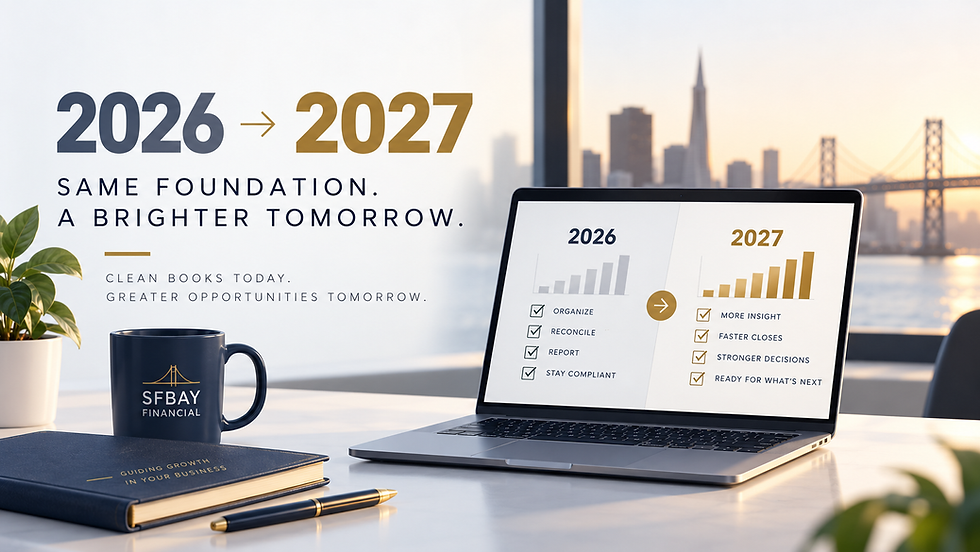
2027 might sound far away. From an accounting perspective, it isn’t.
Some changes that take effect in 2027 will affect how businesses file information returns, maintain accounting records, and, in certain cases, apply U.S. GAAP. And while not every new accounting standard applies to every small business, there’s a bigger lesson here for CFOs, finance directors, property managers, and business owners:
The best time to prepare for next year’s accounting changes is before next year.
Waiting until filing season or year-end to clean up your books is rarely a good strategy. Whether you manage a growing company, a real estate portfolio, or multiple business entities, accurate bookkeeping and consistent financial reporting make regulatory changes much easier to handle.
Here are a few things smart finance teams should have on their radar.
1. The IRS Is Retiring FIRE
One of the most immediate operational changes involves information returns.
The IRS is retiring its Filing Information Returns Electronically (FIRE) system. Beginning with the 2027 filing season, businesses currently using FIRE will need to transition to the IRS Information Returns Intake System (IRIS) for affected information returns.
The change matters for businesses filing Forms 1099 and other information returns that have historically been submitted through FIRE.
Current FIRE users need to obtain an IRIS Transmitter Control Code (TCC) and prepare their filing process for the transition. The IRS has specifically encouraged filers to make the move before the 2027 filing season rather than waiting until deadlines arrive.
For businesses that rely on an outside accountant, payroll provider, or bookkeeping team, this is also a good opportunity to confirm who is responsible for filing what.
Because nothing makes January more exciting than discovering nobody was actually responsible for the 1099s.
2. Certain GAAP Updates Become Effective for Reporting Periods Beginning in 2027
The Financial Accounting Standards Board (FASB) continues to update U.S. Generally Accepted Accounting Principles, or GAAP.
One example is Accounting Standards Update 2025-12, which contains a variety of improvements and clarifications to the FASB Accounting Standards Codification. Those amendments are effective for annual reporting periods beginning after December 15, 2026, with early adoption permitted.
Does that mean every small business owner needs to spend the weekend reading FASB updates? Definitely not.
But businesses that prepare GAAP financial statements, or provide financial information to lenders, investors, partners, or other stakeholders, should make sure their accounting team understands which changes actually apply to them.
That starts with something much less glamorous than accounting standards: Good books.
3. Better Compliance Starts With Better Data
New reporting requirements tend to expose old accounting problems.
An inconsistent chart of accounts. Transactions sitting in Uncategorized Expense for six months. Missing vendor information. Accounts that haven’t been reconciled. Different properties recording the same expense five different ways.
Those problems might seem manageable during normal operations.
Then year-end arrives.
Or an investor asks for a report.
Or your CPA needs supporting documentation.
Or the bank wants updated financials.
Suddenly, the bookkeeping cleanup becomes urgent; and expensive.
For real estate companies and property managers, this becomes even more important. Good real estate accounting and property management bookkeeping require consistent tracking across properties, entities, vendors, and ownership structures.
Clean data makes rental property financial reporting faster, more accurate, and much easier to analyze.
4. Don’t Just Close the Books. Make Them Useful.
Compliance is important, but accounting shouldn’t exist only to satisfy the IRS, your CPA, or your lender.
Your books should help you run the business.
A strong month-end process should give management timely visibility into things like:
Revenue and expenses
Accounts receivable and payable
Cash balances
Budget versus actual performance
Property-level profitability
Outstanding liabilities
Cash flow trends
That’s where financial reporting moves from a compliance function to a management tool.
For real estate owners, better reporting can help identify rising operating expenses, underperforming properties, cash requirements, and opportunities to improve NOI.
For small businesses, regular cash flow analysis can help management understand whether growth is actually producing cash, or simply creating more receivables and expenses.
The goal isn’t more reports, it’s better decisions.
5. Make 2027 Readiness Part of Your 2026 Close
There’s no reason to wait until January to discover whether your accounting systems are ready.A few simple steps now can make next year significantly easier.
Review your chart of accounts. Make sure accounts are being used consistently and that your financial statements actually reflect how management views the business.
Clean up vendor records. Confirm names, addresses, tax classifications, and W-9 information before information-return deadlines arrive.
Reconcile balance sheet accounts regularly. Bank accounts aren’t the only accounts that need reconciliation.
Review your reporting process. Determine which reports management, lenders, investors, and partners actually need and make sure those reports can be produced reliably.
And finally, clarify responsibilities between your internal team, CPA, payroll provider, and outsourced bookkeeping or controller services provider.
The worst time to figure out who owns a financial process is after the deadline.
The Bottom Line
Accounting rules, filing systems, and technology will continue to change. That doesn’t mean businesses need to chase every new regulation or accounting trend.
It means they need a financial foundation that can adapt when things change: clean books, consistent processes, reliable reporting, and clear responsibilities.
Those fundamentals make compliance easier, improve financial visibility, and give business owners better information for making decisions.
2027 readiness starts with your 2026 books.


Comments